Use this site to turn symptoms into a written scope. It is an independent planning and referral resource, not a contractor’s office.
This site helps owners define the job before they compare estimates. A clear quote should cover water, old insulation, seams, walls, piers, vents, access, drainage and humidity. A line that says only “seal crawl space” is too vague.
Use the secure project form to describe the crawl space. Photos of the access, old liner, insulation and visible water can help shape the questions. Photos alone cannot confirm the cause or the price.
What belongs in a complete system?
A full quote may include:
- finding plumbing leaks, surface water or groundwater that needs its own scope;
- removing debris and noting mold, pests or damaged wood that need another trade;
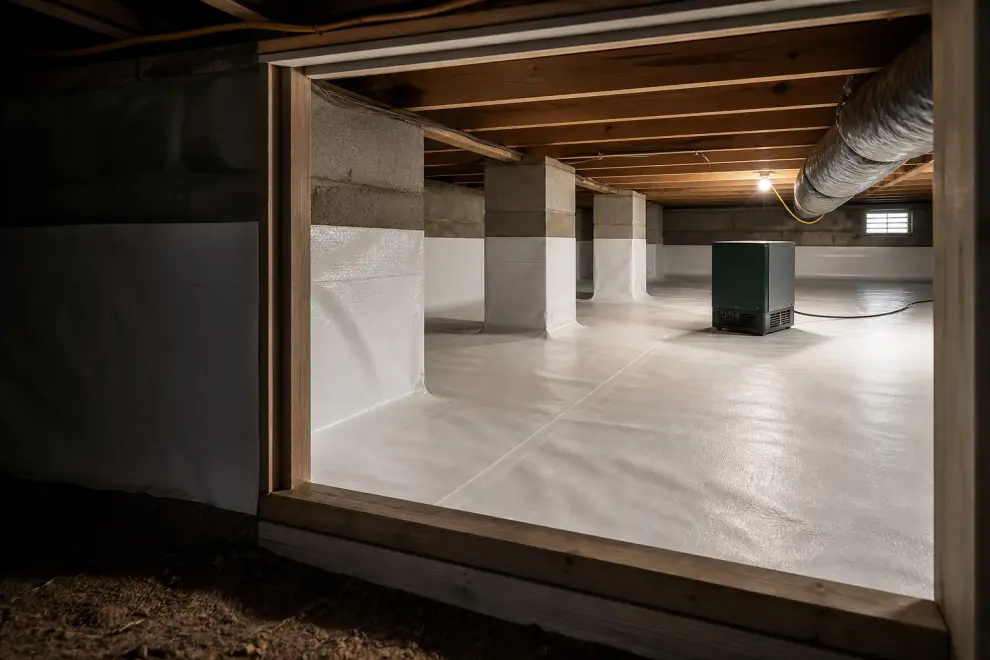
- adding a continuous ground-and-wall vapor retarder;
- sealing seams, piers, vents, openings and the access door;
- adding drainage or a sump only when the water path supports it;
- choosing a code-right way to control humidity; and
- listing upkeep, exclusions, and product and service terms.
Each home is distinct. Read the full sealing scope before comparing product names.
Is sealing the same as a loose vapor barrier?
No. A sheet over the soil can reduce soil vapor. It does not create a sealed, controlled crawl space by itself. Full sealing also deals with walls, seams, openings and indoor moisture. The side-by-side comparison shows which quote fields split the two jobs.
Why should water control come first?
The Franklin Soil and Water Conservation District says parts of Franklin County have clay-heavy soil that drains poorly. It also notes that hard subsoil is common on some newer lots outside Interstate 270. Grading and landscape changes can direct water toward a house.
Those local facts make the outside water route worth checking. They do not prove the cause at one home. A pipe leak, surface runoff and groundwater are distinct problems. A liner does not repair them.
If you see standing water or wet base walls, start with the water control guide. It explains when grading, drainage, a sump or another specialist may need to come first.

What does sealing cost in Columbus, Ohio?
Three published sources show why the scope matters:
| Columbus source | Published planning figure |
|---|---|
| CrawlRepair | $3,150-$9,250 for a complete system |
| Angi, May 2026 | $5,253 average; $4,775-$14,325 reported range |
| CrawlSpaceCosts, 2026 | $4,800 average; $3,120-$6,960 full-encapsulation range; $2,200-$12,000 broader range |
The sources use distinct definitions. Drainage, a sump, power, insulation, mold work and frame repair can change the total. The Columbus cost guide separates those items from the base system.
How should you compare contractors in Columbus, Ohio?
Columbus owners may see independent contractors, regional trade experts and large dealer networks. Ask each contractor to price the same result. Use the 12-field quote checklist to compare liner, sealing, drainage, humidity control, exclusions and written terms line by line.
The City of Columbus lists home basement water control within its limited home-improvement contractor scope. Ask which current license or registration covers the proposed work, then check it through the City’s live records.
Frequently asked questions
Is crawl-space sealing worth it?
It can be when soil vapor and uncontrolled humidity are the real problems and the quote covers the full system. It does not replace repairs for active leaks, serious frame damage or existing mold.
Does every sealed crawl space need a dehumidifier?
An unvented crawl space needs an approved way to control air and humidity. Ohio’s current residential-code rule includes mechanical exhaust, conditioned air and properly sized dehumidification as possible paths. Ask which path is proposed and why.
How long does work take?
Some local contractors describe work lasting one to several days. Cleanup, drainage and repairs can add time. The quote should state the sequence and what may change it.
Can photos provide an exact estimate?
No. Photos do not show moisture readings, hidden entry points, full dimensions or structural issues. Final scope and price should follow an on-site inspection.